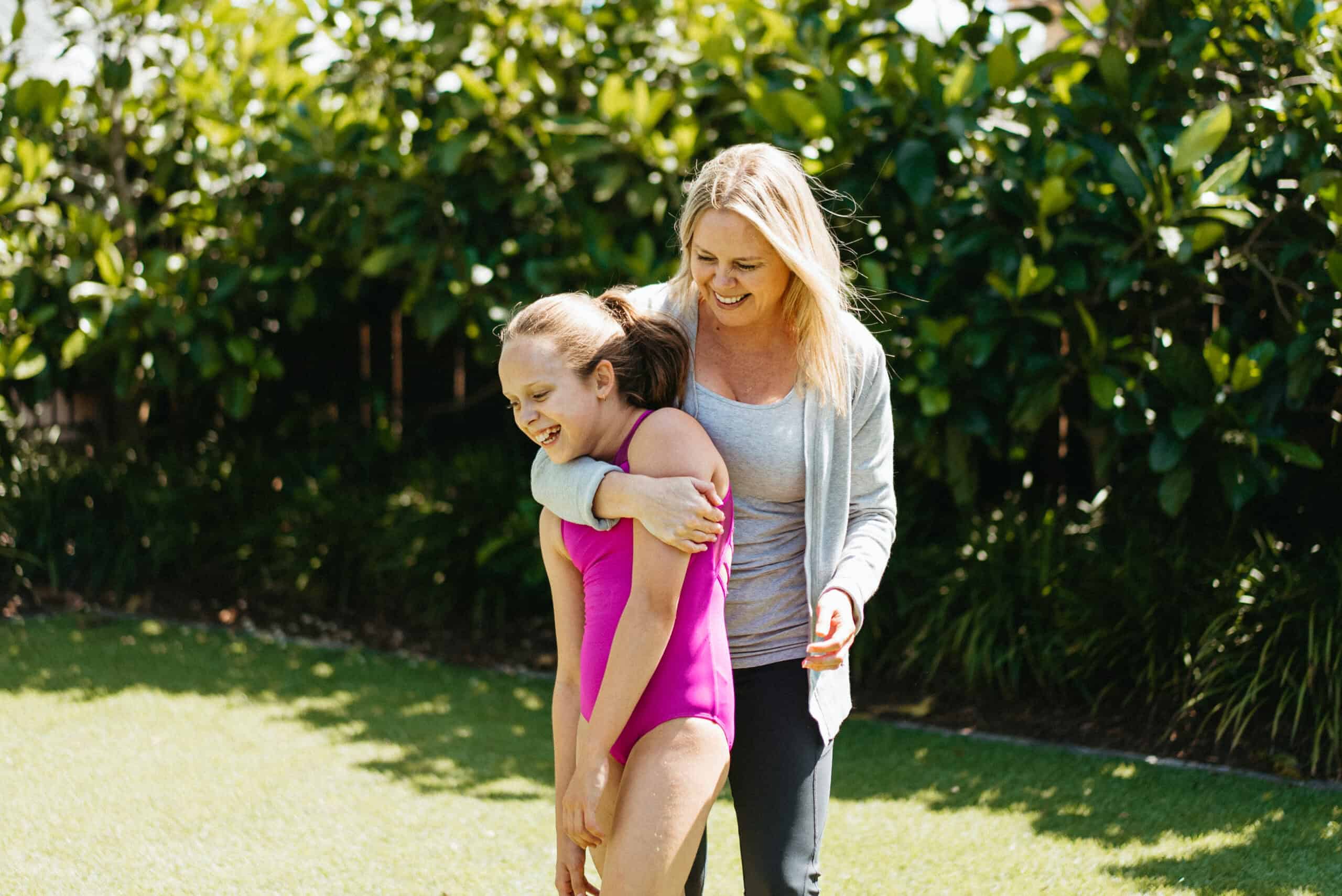
She is fine right up until the car door shuts. She holds it together through the whole session, walks out with a wave for her coach, and then the second she is buckled in beside you, the tears come. Or she comes out red-eyed and will not say why, and you spend the drive home trying to work out whether something happened, or whether this is just what Tuesdays are now. Crying at gymnastics, in the gym or on the drive home, is one of the most common things gym parents wonder about and one of the least talked about.
If you have sat in that car park wondering whether you should be worried, you are not doing anything wrong. And neither is she.
Occasional tears at or after gymnastics are far more common than most gym parents admit to each other in the viewing gallery. On their own, they are rarely the alarm bell they can feel like in the moment. But it does help to understand what the tears usually mean, and to know the gentler signs that it is worth looking a little closer. So let us walk through both.
First, is it normal? Usually, and the pattern matters more than the tears
The honest answer depends far less on the tears themselves and more on the pattern around them. Occasional tears in a sport she cares about are ordinary. A steady stream of them, session after session, or crying that is slowly getting worse rather than easing, is a different signal, and we will come to that further down.
Here is the developmental part, and it is worth knowing. Children feel emotions at close to full adult intensity. What they do not yet have is the adult machinery to manage those feelings, because the parts of the brain that handle emotional regulation keep developing right through childhood and into the teenage years. Regulation is a skill she is still building, not one she should already own.
So when a hard skill, a fall, a sharp correction, or plain tiredness pushes past what she can hold, it spills over as tears. That is not weakness, and it is not drama. It is a young nervous system doing exactly what young nervous systems do.
There is often a kinder truth underneath it too. Children tend to cry hardest about the things that matter most to them. The tears are frequently a measure of how much she cares, not a sign that something has gone wrong.
Parent Translation
Her feelings are running ahead of her ability to manage them. That gap is completely normal at her age, and it narrows as she grows.
Why the car park tears are their own thing
So many parents describe the exact same pattern. She is composed in the gym, getting on with it, seemingly fine. Then the wheels come off the moment she is back with you.
Child-development writers have a name for this: after-activity restraint collapse. She spends the whole session holding herself together in a demanding, structured place, and only lets the feelings out once she reaches the safest place she knows. Very often, that safest place is you.
Read that way, the meltdown in the car is not evidence that training went badly. It can be a sign that she trusts you enough to fall apart in front of you, which is not a small thing.
It is also worth running a quick, unglamorous check before you read anything deeper into it. Is she hungry. Is she exhausted. A tired, empty child regulates far worse than a fed, rested one, and a two-hour session sits right on top of both. Some coaches and clinicians use the little checklist HALT for this, hungry, angry, lonely, tired, precisely because so much big feeling turns out to be one of those four wearing a costume.
Parent Translation
Sometimes the tears are about blood sugar and tiredness, not gymnastics at all. Food and rest first, questions later.
“I used to interrogate her the whole way home and it always ended in a fight. Then I started handing her a snack and saying nothing. Nine times out of ten she is chatting happily by the time we hit the highway.”
A gym mum of a Level 4
What the tears can mean in a gym specifically
Gymnastics carries a few pressures of its own, so some meanings come up more often than others. None of these is a diagnosis, and none of them is yours to settle on your own. They are simply possibilities worth holding gently, and usually worth a calm word with her coach.
She has hit a wall with a skill
Progress in this sport is rarely a straight line. A skill she almost has, then loses, then almost has again, is genuinely maddening, and frustration and tears travel together. This kind of crying tends to pass once the skill clicks. It is so common that we have written separately about why skills seem to disappear for a while, especially through growth.
She is scared of something
Fear is common in gymnastics, and it is not the same as not wanting to work. It shows up most around beam and around backward skills, where she cannot always see where she is going. Coaches see this constantly and have patient ways through it. If it is becoming a pattern rather than a passing wobble, our pieces on mental blocks and on the beam specifically go deeper.
She is measuring herself against everyone else
Comparison to the girl on the next beam, or a fear of letting her coach or you down, can sit underneath the tears. This one is worth noticing, because when a child starts tying her worth to her results, an ordinary hard day can feel enormous. The research on young athletes is fairly clear that self-critical perfectionism, the sense that she is only as good as her last score, is one of the patterns most linked with anxiety over time.
The tears come with pain
This one sits apart from the rest. Crying that is linked to physical pain needs checking rather than reading as emotional, because a growing gymnast can be carrying an overuse niggle or a genuine injury and pushing through it so she does not fall behind. Pain is a conversation for her coach, and if needed a health professional, not something to train through. Growth changes a great deal about how her body copes, which is part of why we wrote about supporting her through growth.
Parent Translation
Frustration, fear, and comparison usually settle with time and support. Tears tied to pain are the ones to check properly, every time.
Coach Insight Moment
Tears in the gym are not a red card
In a lot of years around gyms, as a coach and a judge, I have seen a great many tears. The vast majority are not a sign that anything is wrong. They are a gymnast who is tired, or frustrated with a skill she wants badly, or working up the courage to try something that scares her.
Good coaches are not thrown by it. We expect it, we make room for it, and we keep going gently. A gymnast who cries, wipes her face, and has another go is showing you resilience, not fragility.
What I pay attention to is not the single tear. It is the gymnast who used to bounce back and slowly stops bouncing back. That change is the thing worth talking about, together, coach and parent.
When it is worth looking a little closer
Almost everything above is the normal weather of a sport she cares about. So how do you tell ordinary tears from something that deserves more attention?
The honest answer from the research is that it is rarely any single moment. It is frequency, and escalation, and a cluster of changes appearing together, rather than one hard session. A few things, showing up at the same time and sticking around, are worth gently noticing:
- The dread starts earlier. Tears before most sessions, not just during or after, or real reluctance to go where there used to be none.
- The change follows her home. Shifts you also see outside the gym, in her sleep, her appetite, her mood, or how withdrawn she has become.
- The joy drains away. A gymnast who once loved it turning flat about a sport she used to light up for. Losing the love of a sport she once adored is one of the clearest markers researchers use for burnout.
- The self-talk turns hard. Language like “I am not good enough,” or a sense that she is only worth as much as her last result.
- Tears keep coming with pain. Anything physical that is not settling.
None of these tells you what is going on by itself, and none of them is yours to diagnose. They are simply signals that it is worth looking closer and talking to someone who can help.
The first person is usually her coach, approached as a partner rather than an inspector. Something as simple as, “I am noticing this at home, what are you seeing in the gym?” opens the door without putting anyone on the defensive. Good coaches and good clubs welcome that conversation, and if you are not sure how to start it, we have a whole guide on talking to her coach without overstepping. If what you are seeing feels bigger than gymnastics, that is the point to bring in your GP or a psychologist who can look at the whole picture properly. Sometimes the tears are also part of a bigger question about whether the sport is still right for her, and if you are there, our piece on navigating “I want to quit” may help.
What actually helps in the moment
When she is upset, the instinct is to fix it, or to talk her out of the feeling. What the research on children and emotion points to is almost the opposite, and it is simpler than fixing.
- Name it before you solve it. “That looked really frustrating” lands better than “you are fine.” Helping her name the feeling settles it faster than rushing her to calm down. This is the core of what psychologists call emotion coaching, and children who get it tend to regulate better over time.
- Lead with connection, not analysis. A simple “I love watching you do gymnastics,” with no “but” on the end, carries further than a debrief. Let her set the tone on the drive home, silence included.
- Save the coaching for later. The car, while she is still raw, is the worst place for feedback. It rarely goes in, and it usually stings.
- Praise the effort, not the score. Noticing how hard she worked, rather than where she placed, gently loosens the knot between her worth and her results.
- Check the basics first. Food, water, sleep. A surprising number of gym tears are really an empty stomach and a late night wearing a costume.
- Loop in her coach when there is a pattern. Not to complain, but to compare notes. You see home, they see the gym, and the full picture lives in both.
“For ages I thought crying meant she hated it. Turns out she cried because she loved it and could not do the skill yet. The day it clicked, she cried about that too.”
A gym mum of a Level 6
FAQs about crying at gymnastics
Should I make her go if she is crying?
A one-off wobble on a tired day is usually fine to gently move through, and she often feels better once she is in and busy. Steady reluctance or real dread over time is different, and is worth a calm conversation with her rather than a push.
She cries every time she gets frustrated but loves gym otherwise. Is that a problem?
Frustration tears from a child who still loves the sport are very common and usually ease as her skills and her emotional regulation both grow. It is far more about how she is going overall than any single teary session.
She has started crying before training now. What do I do?
Crying before sessions is worth paying closer attention to than crying during them, because dread that arrives ahead of time often points to something building. Start with a gentle, curious chat with her, then compare notes with her coach so you can understand what changed.
Is it bad for her to cry in front of her coach?
Not at all. Experienced coaches expect tears and handle them with care. How her coach responds to them actually tells you a lot about the environment she is training in.
When should I bring in a professional?
When the worrying signs cluster and stick around, when things change outside the gym, or when anything about her eating, mood, or pain concerns you, that is the time to see your GP or a psychologist. You are not overreacting by asking. Asking early is what informed parents do.
This is general parent education, not clinical advice. If your gymnast is going through something that feels bigger than the sport, persistent anxiety affecting school, changes around eating, or anything safety-related, please see a registered health professional alongside whatever else you are doing.
So the next time she falls apart at pickup, you can take a breath. Most of the time you are looking at a girl who cares a great deal, in a sport that asks a great deal, with a still-growing ability to hold all of it at once.
Your job in that moment is not to fix the feeling or to fear the worst. It is to be the safe place she lands, to keep a gentle eye on the bigger picture, and to trust that noticing, kindly, is enough.
Gymnastics Online is being built to help parents make sense of the realities of this sport, with clear guidance, real expert insight, and a community that understands what this journey actually looks like.
Sources
If you would like to read more:
- The Gottman Institute, An Introduction to Emotion Coaching
- Understood.org, Restraint Collapse: Why Kids Fall Apart After School
- American Academy of Pediatrics (2024), Overuse Injuries, Overtraining, and Burnout in Young Athletes
- Johns Hopkins Medicine, Student Athlete Mental Health (perfectionism and self-worth)
- Gymnastics Medicine, Eating Disorders and the Sport of Gymnastics: Warning Signs and Prevention
Ready to feel more confident in the gym — and in the car park?
Be Part of the Inner Circle