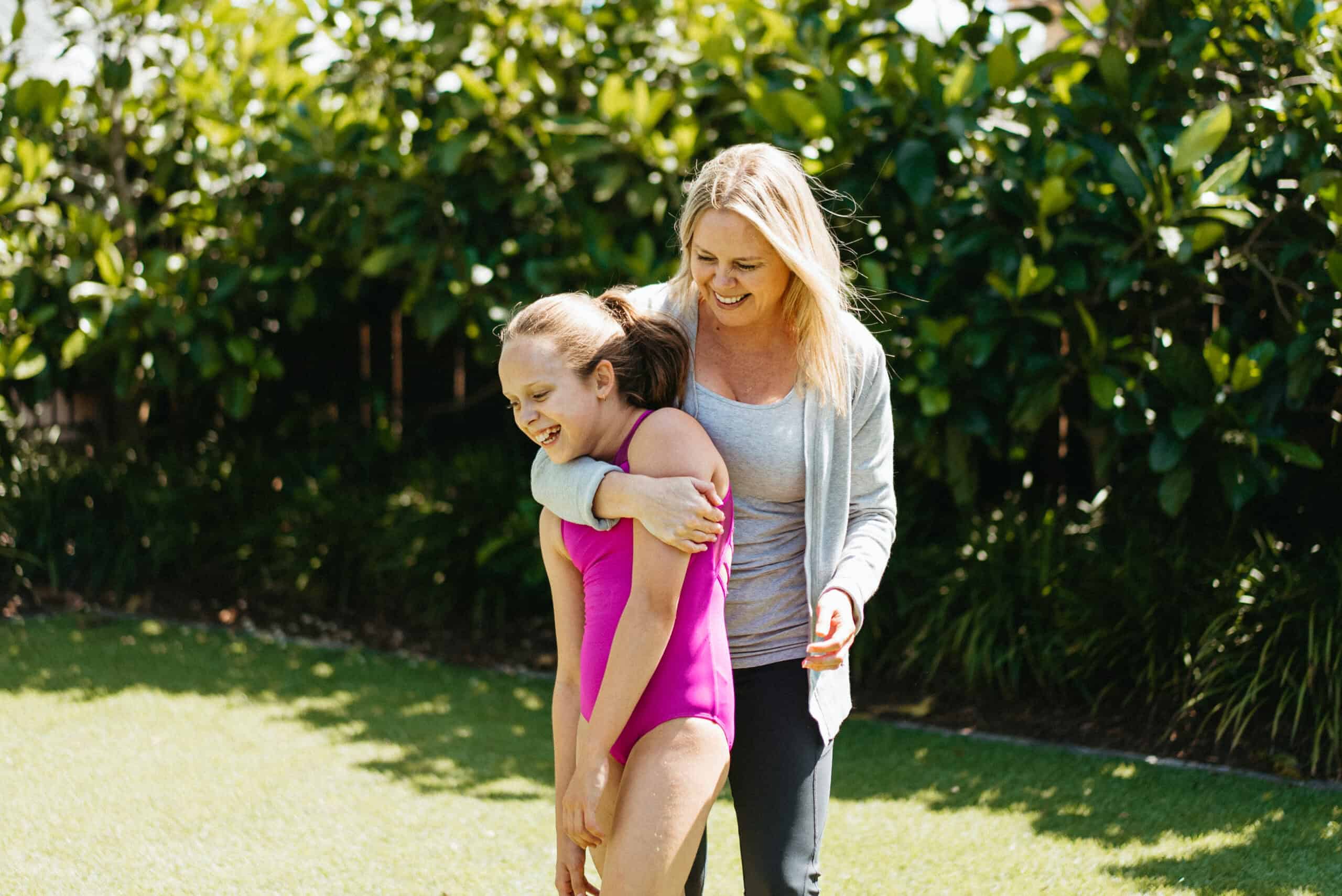
If you have spent any time in a gym viewing gallery, you have probably seen a version of this. Your daughter comes off the beam after a fall, chin wobbling, ready to give up on the whole session. Her coach crouches down, says something you cannot hear, and thirty seconds later she is back up on the beam having another go. That small moment is a great gymnastics coach at work.
You have probably also noticed that the coach who can do that is not always the one with the longest list of qualifications, or the most decorated competitive record. The knowledge is there in plenty of coaches. Something else is doing the work in that thirty seconds.
If you have ever wondered why one coach reaches your daughter when another, on paper just as qualified, does not, you are not imagining it. And you are not being disloyal to anyone by noticing.
So it is worth understanding what actually separates a good coach from a great one, because researchers have studied this properly, and the answer lands somewhere most of us do not look first.
Knowledge is the entry ticket, not the finish line
A good gymnastics coach carries an enormous amount of technical knowledge. How a skill is built shape by shape. How to spot safely. Strength and conditioning for a growing body. The mechanics underneath a clean handstand or a stuck landing. The judging code and what actually earns the score. None of it is optional, and it takes years to learn.
But a coach can hold all of that and still not reach your daughter. Knowing the sport is what qualifies someone to coach it. It is not, on its own, what makes them good at it.
Parent Translation
Deep technical knowledge gets a coach in the door. Whether that knowledge actually reaches your daughter is a separate skill, and a rarer one.
What turns knowledge into coaching is communication
This is the part that is easy to underrate, because from the gallery it can look soft. It is not soft, and the research is fairly firm on it.
The most widely used definition of coaching effectiveness comes from two researchers, Jean Côté and Wade Gilbert, and it has been adopted by bodies as serious as the US Olympic and Paralympic Committee. They describe a good coach as someone who draws on three kinds of knowledge, not one.
The first is professional knowledge, which is all the technical and sport-science expertise above. The second is interpersonal knowledge, which is the ability to relate to and communicate with the athlete. The third is intrapersonal knowledge, which is the coach’s own self-reflection and willingness to keep learning. The important detail for us as parents is that the second one sits alongside the first, not beneath it.
The same team describes the job of a good coach as building four things in an athlete: competence, confidence, connection, and character. Only one of those four is the gymnastics itself.
Parent Translation
A correction only helps if it lands in a way she can take in. The same instruction, said so your daughter can actually hear it, is the skill underneath the skill.
Great coaches also do not teach every gymnast the same way. They demonstrate the skill, they explain it, and they help her feel the shape in her own body, because different children take the same information in through different doors on different days. They read the moment too, sensing when she needs a firm nudge and when she needs a steadier, gentler word. That instinct for the individual child is one of the hardest things to teach and one of the clearest marks of a great coach.
Great coaches communicate in three directions
When you watch a genuinely good coach closely, the communication that matters is not one conversation. It runs three ways at once, and all three matter to your daughter’s experience.
With your daughter
Meeting her where she is, in the language and tone that reaches her that day, so the knowledge actually transfers. The research here is some of the strongest in the field. Coaches who explain the why behind a correction, offer real choices where they can, and acknowledge how she is feeling tend to produce gymnasts who are more motivated, more resilient, and more likely to stay in the sport. Coaches who rule mainly through pressure and fear tend to produce the opposite: more anxiety, more burnout, more girls walking away.
With you
So you understand what she is working on, why the hard weeks are part of it, and roughly where she is heading. You should not have to reconstruct all of it from the viewing gallery and the car ride home. Good communication with parents is genuinely difficult in a busy gym, and it is worth understanding how coaching decisions get made from the coach’s side as well. If you are not sure how to open that conversation without overstepping, we wrote a whole piece on how to talk to your child’s coach, and another on how coaching decisions actually work.
With the club
Raising the real needs of her group, and being honest with the club about what a squad needs to stay safe and to keep developing. A lot of this happens in places parents never see, and a coach who advocates upward for her gymnasts is doing something that protects your daughter long before you would ever know it was needed.
Parent Translation
When a coach communicates well in all three directions, the whole experience tends to feel calmer and clearer, for her and for you.
What great coaching feels like from the gallery
You can often feel it before you can put words to it. When researchers look at the kind of gym environment that helps children thrive, a few things come up again and again.
She is measured against her own last month, not against the girl on the next beam. Effort and improvement get noticed, not only the polished result. This is what sports researchers call a mastery climate, and it links consistently with higher motivation, lower anxiety, and children who want to keep going.
The gym also feels like a place where she is cared for on the hard days as much as the good ones. A gymnast who knows she is safe to fall, to be frightened, and to have an off day will take the kind of risks that real progress is built on. That sense of being safe and valued is not a soft extra. In the research it carries real weight of its own.
And she is trusted to think, not only told what to do. Being given a little room to problem-solve, rather than being managed every second, is part of how a young athlete grows into someone who can eventually coach herself through a wobble on the beam.
“Her first coach knew everything and my daughter was terrified of her. Her new coach explains things in a way she actually gets, and asks her what she thinks. Same kid, completely different child in the gym.”
A gym mum, on switching squads
That is the kind of thing I hear from gym parents constantly, and it almost never mentions a qualification.
Coach Insight Moment
Listen to how she talks about her coach
As a coach and a judge, I have watched a lot of coaches over a lot of years. The ones who get the most out of a gymnast are very rarely the ones who know the most. They are the ones who can take what they know and hand it to her in a way she can use that day.
I have seen brilliant technicians who could not reach a nervous eight year old, and I have seen coaches with steadier, plainer knowledge get far better results because the gymnast trusted them and understood them.
When a gymnast talks about a coach she thrives under, she hardly ever mentions their competitive record. She says the coach believed in her, or finally explained it in a way that made sense, or stayed calm when she was scared. That is the tell, and it is worth listening for.
What this means for you
None of this is a checklist to hold your daughter’s coach to, or a scorecard to mark them against. It is more a set of gentle things to notice, so you can recognise good coaching when you have it.
- Watch how she responds, not just what she is taught. A coach who reaches your daughter and settles her is doing the hardest part of the job well, even if they are quieter about it than the coach two mats over.
- Notice the communication with you. A coach who keeps you roughly in the loop, even briefly, is showing a real strength, not doing you a favour.
- Value the calm. Coaches who stay steady when she is frightened, and who never trade on shame or body comments, are worth a great deal.
- Ask, do not audit. If you are curious about how she is going, her coach is the right person to talk it through with, as a partner rather than an inspector.
- Trust what you feel. You know your daughter. You can usually sense whether she feels understood in that gym, and that instinct is worth taking seriously.
FAQs about what makes a great gymnastics coach
Does a great coach need to have been an elite gymnast?
No. Being an excellent gymnast and being an excellent coach are genuinely different skills. Communication, patience, and the ability to teach very often matter more than a competitive record. Some of the best coaches were middling gymnasts who had to think hard about how a skill works, and some brilliant gymnasts struggle to explain the things that came easily to them.
My daughter’s coach is quieter or less decorated than another. Should I worry?
Not on that basis alone. The coach who reaches your daughter and communicates well may be doing more for her than a more credentialed coach who does not. Fit between coach and child is a real, meaningful factor, not a consolation prize.
How do I know if the communication is good enough?
A rough sign is whether you and your daughter both understand what she is working on and why. If you are consistently in the dark about how she is going, that is worth a friendly, curious conversation rather than a silent worry.
Should I raise things with the coach, or stay out of it?
Most coaches welcome a respectful, curious parent. Ask questions, share what you are noticing at home, and then let the coach coach. Partnership tends to serve your daughter better than either silence or over-involvement, and the good clubs know it.
What if my daughter loves a coach I have concerns about?
Being liked and being good for her are not always the same thing, in either direction. Trust what you can observe over time: does she feel safe, is she treated with respect, does the coaching hold up as well as the charm. If something feels off beyond ordinary strictness, that is a reason to look closer and talk to the club, not to talk yourself out of it.
This is general parent education, not clinical advice. If your gymnast is going through something that feels bigger than the sport, persistent anxiety affecting school, changes around eating, or anything safety-related, please see a registered health professional alongside whatever else you are doing.
So the next time you watch a coach crouch down and say the thing that makes your daughter reset and go again, you are watching the real work. Not the certificate on the wall. The sentence she could actually hear.
You do not need to grade her coach against any of this. You just get to notice it, and to appreciate the coaches who can take what they know and put it gently into your daughter’s hands.
Gymnastics Online is being built to help parents make sense of the realities of this sport, with clear guidance, real expert insight, and a community that understands what it actually looks like from the gallery.
Sources
If you would like to read the research yourself:
- Côté & Gilbert (2009), An Integrative Definition of Coaching Effectiveness and Expertise (the three knowledges and the four Cs)
- Mageau & Vallerand (2003), The Coach-Athlete Relationship: a motivational model (autonomy-supportive vs controlling coaching)
- Systematic review and meta-analysis of motivational climate and youth-sport outcomes (2025) (mastery and caring climates)
- Pashler et al. (2008), on why fixed “learning styles” do not hold up (why great coaches individualise and teach multi-modally instead)
- Vierimaa et al. (2012), Positive Youth Development framework for sport
Ready to feel more confident in the gym — and in the car park?
Be Part of the Inner Circle