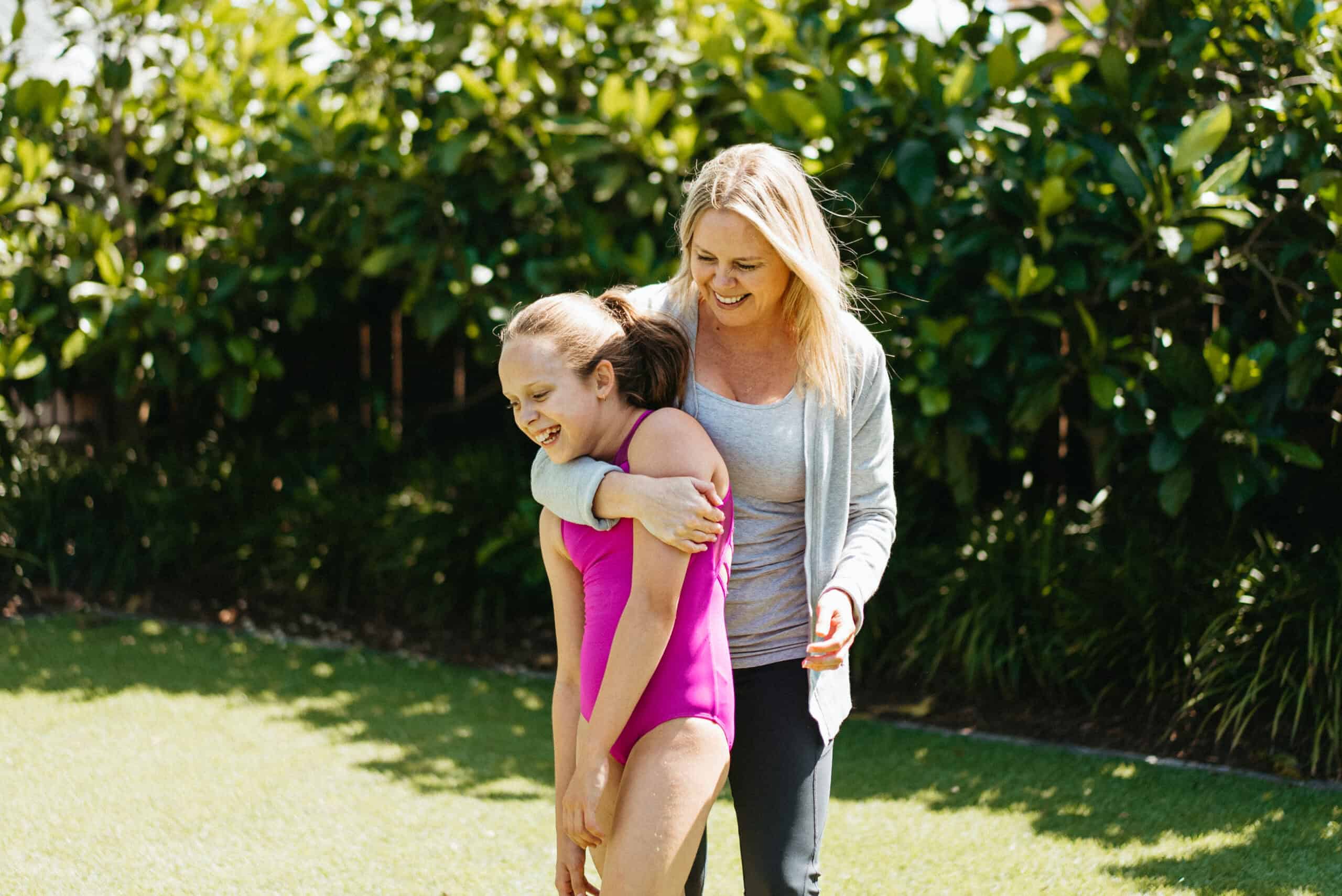
If you are a gym parent, you have probably had a version of this moment. A relative, a friend, sometimes a stranger at a barbecue, raises an eyebrow and says something like, “isn’t that a lot for someone so little?”
It is rarely a question about whether she should do gymnastics at all. It is about how much she loves it. How young. How seriously.
You are not imagining the small sting that leaves, and you are far from alone. Plenty of gym parents quietly carry it, especially after scrolling past the hundredth post telling them children should not specialise in one sport too early.
So it is worth slowing down and looking at what the research actually says, because for gymnastics it is more reassuring than the comment suggests.
Where the “don’t specialise early” advice comes from
Most of that advice is sound, and it rests on a real evidence base. The major sports medicine and athletic development bodies broadly agree that early specialisation is not necessary to reach the top in most sports, and that it is associated with higher rates of overuse injury, burnout and dropping out.
The part that often gets left out is where that evidence comes from. It is drawn largely from sports where peak performance arrives in adulthood, think football, athletics, the team and ball sports. In those sports there is no rush, so trying lots of activities and specialising later genuinely tends to serve children better.
Parent Translation
For most sports, letting her sample widely and specialise later is not falling behind. It is the safer long game.
Why gymnastics is a different case
Gymnastics sits in a small group of sports, alongside diving, figure skating and dance, that researchers call “early-entry” sports. In these, peak performance tends to come before full maturity.
Because of that, the skills are learned young. A child being deeply involved in gymnastics at a young age is closer to expected than alarming. The sports medicine consensus reflects this, noting that some gymnasts may benefit from focusing earlier than athletes in late-peaking sports.
It is worth being honest about the limits of that point too. The same bodies that grant gymnastics this exception are clear that it should not require pushing children young and hard, and that the long-term health effects of heavy early training are not fully known. So this is a “some, and with care” picture, not a green light.
Parent Translation
Her being seriously into gymnastics at a young age is not a red flag. In this sport, that is closer to normal.
The distinction that actually matters: engagement vs intensification
The research keeps returning to one line, and it is the most useful thing a gym parent can hold onto.
There is a difference between early engagement and early intensification. Early engagement is learning skills young and loving the sport. Early intensification is year-round, high-volume, high-competition training with little rest.
What the evidence ties to harm is the intensification, not the early start. The strongest part of that evidence is the link to burnout and dropping out, with injury close behind. And it is worth noting the studies describe these as associations, not a proven cause, so the picture is real but not a precise formula.
Parent Translation
Loving it young is fine, and how gymnastics works. The thing worth protecting is rest and recovery, at any age.
Coach Insight Moment
The difference between a child who loves it and a child who is being pushed
As a coach and judge, I can tell you the early skill window in gymnastics is real. Bodies pick up shapes, air awareness and basic positions younger than they do in most sports, and that is genuinely how this one is built.
But loving it and grinding are not the same thing, and they do not look the same in the gym. A child who is all in because she adores it has a very different energy from one who is carrying a load that is too big for her.
The gymnasts I have seen last in this sport are very often the ones who kept it fun and kept resting, not the ones who did the most hours at the youngest age. Her enthusiasm is an asset. It is worth guarding, not worrying about.
What this means for you
If she started young and she loves it, you have not done something wrong. The questions worth holding are gentle ones, and most of them are about rest and joy rather than whether she belongs.
- Her enthusiasm is not the problem. A child who is all in young is doing something normal for this sport.
- Rest is part of training. Days off and genuine downtime protect the long game, they do not work against it.
- Keep it fun. The sign on many gym walls says it well: if she can say she had fun, it was a good day.
- Ask, don’t audit. If you are ever curious about her training load, her coach is the right person to talk it through with.
- Trust your instincts. You know your daughter better than any general rule does.
FAQs about early specialisation in gymnastics
Does she have to specialise early to be good at gymnastics?
No. The evidence does not support early specialisation predicting elite success in gymnastics. What the sport genuinely needs is early skill exposure, which is not the same as training hard and exclusively from a young age.
Is it bad that she started so young?
Starting young is normal in gymnastics. The research concern is about year-round high load with little recovery, not about early starts in a sport where skills are learned young.
Will she burn out?
Burnout is linked more to intensity without recovery than to early starts. Rest, variety within the sport and keeping it enjoyable all help. If her motivation drops away sharply or training starts to feel like dread, that is a good moment to talk with her and her coach.
How many hours is too many?
There is no single number that fits every child. Training load is best discussed with her coach, who knows her stage, her body and how she is coping. If something feels off to you, that is worth raising rather than sitting with.
This is general parent education, not clinical advice. If your gymnast is going through something that feels bigger than the sport, persistent anxiety affecting school, eating concerns, anything safety-related, please see a registered health professional alongside whatever else you are doing.
So the next time someone wonders aloud whether she is too young to be this into gymnastics, you can hold the fuller picture. Loving it early is not a mistake you made. It is closer to how this particular sport is meant to work.
Staying curious and informed, the way you are right now, is exactly the right thing to be doing for her.
Gymnastics Online is being built to support parents through the realities of the sport, with clear guidance, expert insight, and a community that understands what this journey really looks like.
Sources
If you would like to read the research yourself:
- American Orthopaedic Society for Sports Medicine (AOSSM), Early Sport Specialization Consensus Statement (2016)
- American Academy of Pediatrics, Sports Specialization and Intensive Training in Young Athletes (2016)
- National Strength and Conditioning Association, Long-Term Athletic Development position statement
- Jayanthi et al., Sports Specialization in Young Athletes (Part I)
- International Society of Sport Psychology, To Sample or to Specialize?
- Australian Institute of Sport / Australian Sports Commission, Sport Specialisation in Young Athletes
Related reading
- Understanding gymnastics levels in Australia
- Coach-approved gymnastics exercises for home
- Balancing gymnastics, school and childhood
Ready to feel more confident in the gym — and in the car park?
Be Part of the Inner Circle