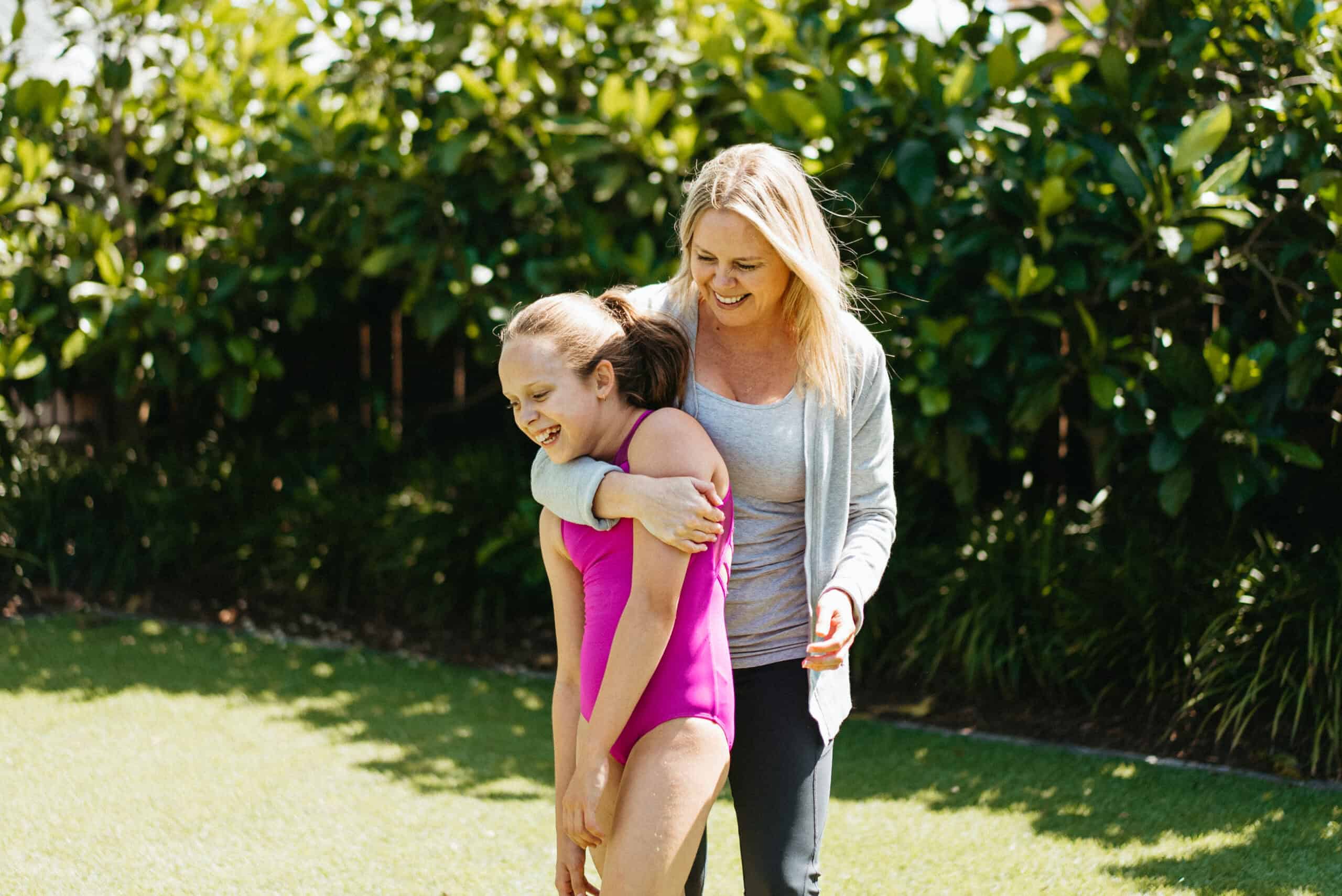
If you have spent time in a gym viewing gallery, you have heard a version of this story. A girl who trained fourteen hours a week for six years had a rough session on bars one Tuesday, got in the car, and told her mom she was done. Ask why girls quit gymnastics and that is the version you usually get, one bad session and no warning.
If it has happened in your own family, you may still be turning that one session over. What was said, who said it, whether a different response in the car would have changed anything.
That instinct to look for the one thing is completely understandable, and it is usually looking in the wrong place. The bad practice on Tuesday was real, but it was rarely doing the work on its own.
What follows is the fuller picture: the range of reasons girls actually leave gymnastics, grouped the way they tend to arrive, and what that changes for a parent who can see something building.
The last reason is rarely the whole reason
Researchers have been counting the reasons children leave sport for about forty years. The reviews have now catalogued more than 150 of them.
What matters more than the count is what happens when you ask which one did it. In 2025 a team validating a dropout questionnaire across 648 young people in seven countries put it plainly: no single reason determines whether a young person leaves sport. What ends a sporting childhood is a cumulative effect of several reasons at once, and the particular combination is different for every child.
The most cited review of the earlier literature pulled together 43 separate studies and grouped the reasons into five areas: enjoyment fading, a girl’s sense of her own competence dropping, social pressures, competing priorities, and physical factors including injury and maturation. Almost nobody arrives at the exit through only one of those doors.
Our own data points the same way, on a smaller decision. When we surveyed 154 gymnastics families in September 2025, we asked the 106 who had considered changing clubs, or already had, to name their reasons.
Only 16 percent named one. The median was three.
Changing clubs and leaving the sport are different decisions, and that number speaks to the first one, not the second. What it shows is that these families were rarely working from a single reason even when the stakes were lower.
Parent Translation
Reasons accumulate. By the time she says the words, she has usually been carrying four or five things for months, and the last one is the one that happened to be on top.
One honest caveat about that research: 89 percent of the participants across those 43 studies were boys, and most of them played team sports. It tells us about the shape of dropout, not about gymnastics specifically. That gap is part of why our own parent data matters, and part of why the categories below include one that most sports do not have.
Here is what tends to be in the stack.
The body
The most visible cluster, and the one families are usually most willing to name.
Injury
An injury takes her out of the gym for weeks or months. She loses conditioning, loses skills she had, and watches her training group move on without her. Coming back is rarely only a physical return.
Fear of coming back
This is a separate thing from the injury, and it is often the one that lasts longer. Her ankle healed. Her confidence going into that vault did not, and the two do not recover on the same timeline.
Growth and puberty
Gymnastics is unusual in how directly a changing body affects the skills. Her center of mass shifts, her strength-to-weight ratio changes, and things she owned last season stop working for a while.
None of that is about how she looks. It is about a body that has changed shape faster than her timing has caught up, and it is temporary for most gymnasts.
It is also genuinely disorienting to be worse at something you were good at, through no fault of your own. We wrote about this in more detail in gymnastics and puberty and in why gymnasts lose skills they already had.
Health
Under-fueling, persistent fatigue, and disordered eating are all real in this sport and all sit outside what a blog can responsibly work through. If any of that is on your mind, that conversation belongs with your doctor or a sports dietitian rather than with us.
Parent Translation
A body that is changing or recovering makes gymnastics temporarily harder in a way she can feel every session, even when she understands every skill perfectly.
The mind
The cluster parents worry about most, and the one where the individual reasons are most often mistaken for each other.
Fear and mental blocks
A skill she has done a thousand times becomes one she cannot make herself do. It is frustrating, it is common, and it is not a sign that something is broken. Most blocks are worked through on the gym floor with a patient coach, which is why we have a whole piece on what mental blocks are.
What makes blocks a dropout factor is the time they take. Months of turning back at the end of the runway wears down a gymnast’s sense of herself as someone who is good at this.
Burnout and losing the love are not the same thing
These two get used interchangeably and they behave very differently.
Burnout is exhaustion. She still wants it, and she does not have anything left to give it. Rest and a lighter load often do real work here.
Losing the love is motivational. She has energy, and the thing she used to want has stopped pulling. Rest does not fix that one, because it was never a fuel problem.
Telling them apart matters, because the responses point in opposite directions. A gymnast who has lost the love and is given a two-week break usually comes back to the same feeling.
She is no longer the strongest in her group
This one appears in the dropout research more consistently than almost anything else, and parents rarely see it coming. A girl who was ahead of her group at nine is mid-pack at twelve, because everyone else caught up and some of them got taller.
Nothing has gone wrong. She has stopped being the girl she thought she was in the gym, and that is a harder loss than it looks from the gallery.
Reading the pressure
Gymnasts are very good at working out what the sport means to their parents. Most parents are not applying pressure on purpose, and the car ride home is where a lot of it lands anyway.
This is not a criticism of anyone. It is a reminder that she is doing arithmetic in the back seat about whose sport this is, and she often gets it slightly wrong in the direction of thinking it is yours.
She never actually chose it
Plenty of gymnasts started at four or five because a parent enrolled them. That was a perfectly good decision and it was not hers. Somewhere around twelve or thirteen she works out that she has a vote, and some girls use it on the first thing available.
Parent Translation
Exhaustion, lost motivation, and a dented sense of her own ability all look similar from the outside and need completely different things.
The environment
Coaching was the single most common answer in our club-switching survey question, named by 76 percent of those families. That category covers two quite different things, and it is worth pulling them apart.
Before we do, it is worth saying plainly that none of what follows is a scorecard for your club. It is a description of things that happen to gymnasts, most of them nobody’s fault.
The coach she loved left
This came up in the written answers families gave us, and it is one of the least discussed reasons on this list. Coaches move clubs, have babies, change careers, and get promoted, all for perfectly good reasons of their own.
For a ten year old who trusted that specific adult, it is a loss, and it is one very few families think to name as a reason.
“Our original coach left the club and we are currently being trained by several coaches after club collaboration with another club.”
From GO’s Parent Insights Survey, September 2025
Coach and gymnast are a poor fit
Different from the above. A coach can be excellent and still not be the right coach for your daughter, and both of those can be true without anyone behaving badly. We looked at what the research says actually reaches a gymnast in what makes a great gymnastics coach.
Her friends left, or the squad got reshuffled
Social pressures are one of the five areas the dropout research keeps returning to, and friendship is the part of that parents see most directly. Whatever keeps her coming in is also what stops.
When her training friend quits, the sport gets noticeably less good, and often within a few months. A squad reshuffle can do the same thing without anyone leaving at all.
What a good environment feels like
Rather than a list of warning signs to check your club against, it is more useful to know what it feels like when the environment is working, so you can recognize it in your own gym.
She is measured against her own last month rather than against the girl on the next beam. She is safe to fall, to be scared, and to have an ordinary bad day without it becoming a problem. Her body is talked about in terms of what it can do, and not in terms of how it looks.
If something in your gym sits a long way outside that, and particularly if it involves her safety or comments about her body, that is a conversation for the club, and where needed for your national governing body’s integrity or safeguarding service. It is not something to work out from a blog post.
The reasons build over months, well before the session everyone remembers.
The life
The cluster families most often name first, partly because it is the easiest one to say without anybody feeling judged.
The hours
Sixteen hours a week is a large share of a childhood, and it is spread across the evenings and weekends where the rest of a family’s life normally happens.
The cost
Seven in ten families in our survey described the financial commitment of competitive gymnastics as challenging or overwhelming. Only around three in ten called it manageable. We have written separately on what gymnastics actually costs.
School
High training hours and senior school years collide, usually somewhere between fourteen and sixteen, and something has to move. We looked at the balancing act in gymnastics, school and childhood.
Family logistics
The driving, a sibling’s activities, a house move, a job change, shift work, a separation, an ill grandparent. Families rarely offer any of these as the reason, and they are frequently the reason underneath the reason.
She found something else
Another sport, a musical instrument, art, debating, a job. Gymnastics asks for so many hours that it rarely loses a share of her attention. It tends to lose all of it at once.
This one is easy to read as rejection and it usually is not. A twelve year old is allowed to discover that she likes something else more, and finding that out is part of what the years in the gym were for.
She wants a different kind of life
Not another sport. A Saturday. A part-time job, a school musical, friends who do not train, an evening with nothing in it.
Around fourteen this stops being about gymnastics at all and becomes about what shape she wants her life to be, which is a normal thing for a teenager to start deciding.
The pathway
The cluster that most sports do not have in this form, and the one that gets discussed least. Gymnastics has a highly structured progression, and a structured progression creates specific ways to fall off it.
Not selected, or moved down
Missing a team, not moving up with her group, or being moved back a level in the middle of a competition season. This is sharper and more specific than “she failed”, and it lands differently because it is a decision made about her by adults she trusts.
All or nothing hours
She wants to do four hours a week. Her club offers sixteen, or the recreational class. There is often nothing in between.
A gymnast who would happily have trained twice a week until she was eighteen leaves at thirteen because that option does not exist.
The ceiling becomes visible
At some point most gymnasts work out that the elite door is not going to open for them. If nothing else is offered in its place, the sport can start to look like a long road to a destination she has already been told she will not reach.
Nothing visible after this
Related, and fixable. No judging pathway anyone has mentioned, no coaching pathway, no tumbling or acro or adult classes, no reason to imagine herself in a gym at twenty. One parent in our survey, asked what resources they wanted, wrote just five words: “opportunities available after a gymnastics career”.
She loves training and dislikes competing
Genuinely common and almost always misread as wanting to leave the sport. She likes the gym, the girls, and learning skills. She does not like competition days, or meets as they are called in the US, and in most clubs those are the price of the squad.
She was recruited out
Diving, acrobatics, cheer, tumbling, and pole vault programs all go looking for gymnasts, and diving programs in particular. A girl who takes that offer is counted as having quit gymnastics, and she has taken her air awareness somewhere else.
Coach Insight Moment
The reason a family gives is almost never the full list
As a coach, the conversation I have had most often is the one where a family tells me it is the hours, or the driving, or the cost. Those are true. They are also, most of the time, the most comfortable item on a longer list.
Underneath there is usually a coach who left eight months ago, a team she did not make in March, a friend who quit in June, and a body that stopped cooperating over the winter. Nobody hid any of that. It never got assembled in one place, including by the family carrying it.
The one I find hardest is the four-hours-a-week gymnast. We lose girls who love the sport because the only two doors we hold open are full squad and recreational, and neither is what she is asking for. That is a structural problem in how clubs are set up, not a problem with her commitment.
What this looks like while it is still forming
The useful thing about a stack is that it takes months to build. Most of it is visible before anyone announces anything, provided you are looking at the whole thing rather than at last Tuesday.
- Count the changes, not the moods. Over the last six months, how many things on the list above have actually happened to her? A coach change, a squad reshuffle, a growth spurt, a friend leaving, a team she missed. Four small ones weigh more than most parents expect.
- Ask about the sport, not about quitting. “What is the best part of training at the moment?” tends to get further than “do you still want to do this?”, which can read as an offer.
- Separate tired from finished. These need different responses, and a couple of quiet weeks is a reasonable way to find out which one you have.
- Take the small losses seriously. A coach leaving or a friend switching clubs can look minor from the gallery and be one of the heavier items she is carrying.
- Ask the club what the middle option is. If the hours are the pressure point, it is worth finding out whether a reduced-hours or non-competitive option exists before it becomes a choice between everything and nothing.
- Say the thing about the car ride. Most gymnasts assume their parents care about the result more than they actually do. It usually needs saying more than once.
None of this is a method for keeping her in the sport. It is a way of making sure that if she does leave, she leaves for reasons everyone has actually looked at.
When leaving is the right answer
Sport researchers have started pushing back on the idea that dropout is automatically a bad outcome, and it is worth understanding why.
A team at the University of Toronto has argued that “dropout” is a poor description of what usually happens. Children move between activities as they grow, and treating every exit as a failure misreads a normal part of growing up.
They also make a point that matters more than the rest of this article: when a sport environment is doing a child harm, leaving it is a good outcome, not a loss.
It is also worth saying that not every stack ends the sport. A good number of the reasons on this page, particularly in the environment and pathway clusters, end in a different gym rather than in no gymnastics at all. Close to a third of the families we surveyed had already changed clubs, and most of those daughters are still competing.
Some of the exits on this page are ones worth slowing down and looking at properly. Others are a thirteen year old correctly working out that she wants a different life, or a gymnast taking her skills to a sport that suits her better. Those are not problems to solve.
FAQs about why girls quit gymnastics
My daughter says she wants to quit. Does that mean she has already decided?
Often not. It can be an opening bid, a request for something to change, or a way of finding out how you will react. We have a separate piece on how to have that conversation, which goes into it properly.
What age do girls most commonly leave gymnastics?
The exits tend to bunch around two points: the growth and puberty years, and the years where training hours collide with senior school. Both are periods where several things on the list above tend to arrive at once, which is likely the real explanation rather than the age itself.
Should we push through, or let her stop?
That depends on which items are actually in her stack, which is the argument for finding out before deciding. A gymnast who is exhausted, a gymnast who has lost the love, and a gymnast who is being treated badly all need different things, and only one of those is helped by encouragement to keep going.
She loves training but hates competitions. Is that a real thing?
Very much so, and it is one of the most misread situations in the sport. It is worth asking the club whether a training-only or reduced-competition option exists, because in some clubs it does and it is not advertised.
Can a gymnast come back after quitting?
Plenty do, and it is more common than most families realize. A break of six or twelve months does not close the door, and some gymnasts return with the motivation they left without. Leaving on decent terms with the club makes that a lot easier.
This is general parent education, not clinical advice. If your gymnast is going through something that feels bigger than the sport, persistent anxiety affecting school, concerns around eating, or anything safety-related, please see a registered health professional alongside whatever else you are doing.
What all of this really changes is where you look. A stack that has been assembled and talked about is a very different situation from one that nobody has counted, even when the ending turns out to be the same.
She may well leave anyway. Girls leave this sport for good reasons all the time, and a gymnast who walks away having been properly heard tends to walk away without carrying much of it with her.
Gymnastics Online is being built to help parents make sense of the realities of this sport, with clear guidance, real expert insight, and a community that understands what it actually looks like from the gallery.
Sources
If you would like to read the research yourself:
- Lara-Bercial et al. (2025), Why Do Children and Young People Drop Out of Sport? (the 150-plus factors, and the finding that no single reason decides it)
- Crane & Temple (2015), A systematic review of dropout from organized sport among children and youth (the 43-study review and the five areas)
- Battaglia, Kerr & Tamminen (2024), The Dropout From Youth Sport Crisis: Not as Simple as It Appears (why not every exit is a loss)
- Visek et al. (2015), The Fun Integration Theory (what children actually mean by fun in sport, and where winning ranks)
- Mageau & Vallerand (2003), The Coach-Athlete Relationship: a motivational model (why autonomy and choice affect whether an athlete stays)
- GO Gymnastics Parent Insights Survey, September 2025 (154 responding families). First-party data.
Ready to feel more confident in the gym — and in the car park?
Be Part of the Inner Circle